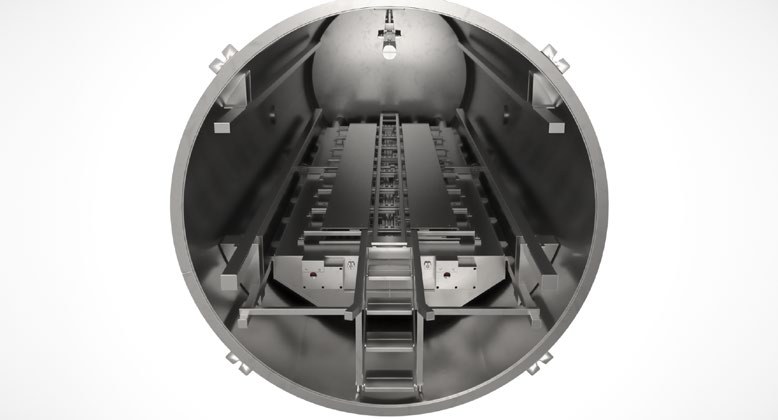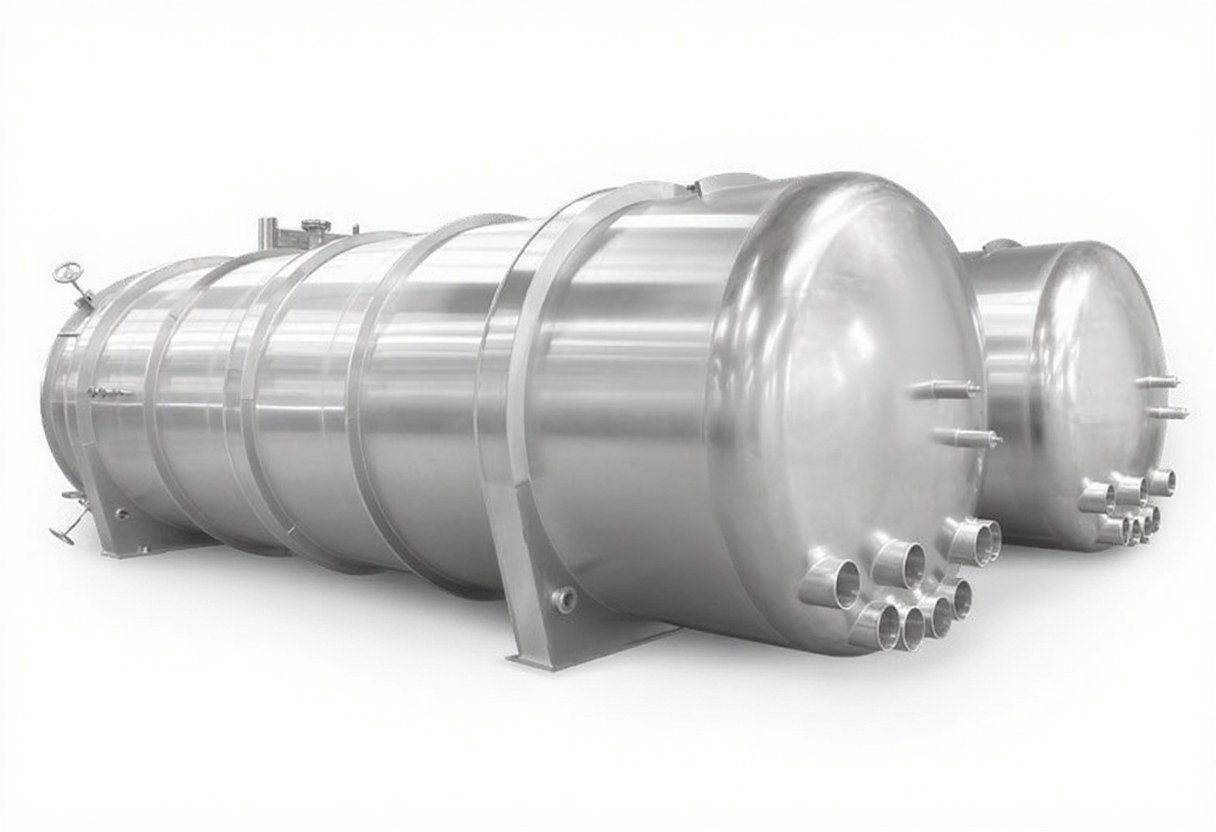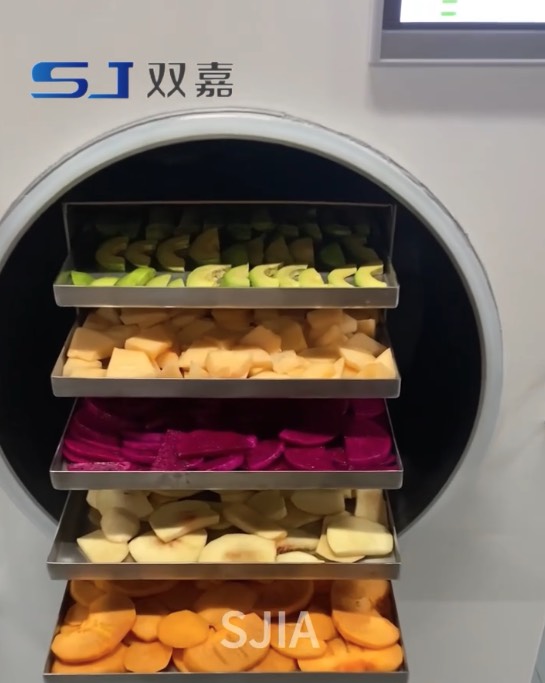
The public video follows a jackfruit batch from tray loading to visible finished product on H Series equipment. It is valuable application evidence, but it does not publish a measured starting load, cycle duration, residual moisture, nutrient result or shelf life. This record focuses on the process inputs a commercial team can actually control.
A real process record from tray loading to visible finished jackfruit, with no unsupported fixed-capacity, nutrition or cycle-time claim.
Project configuration at a glance
| Application | Jackfruit pieces on H Series commercial food freeze-drying equipment |
|---|---|
| Evidence shown | Tray loading, equipment chamber and visible finished product |
| Process controls to record | Maturity, piece geometry, wet mass per tray, freezing condition and endpoint evidence |
| Post-drying priority | Prompt moisture-barrier packaging |
| Results not published | Starting batch mass, cycle time, final moisture, nutrition retention, shelf life and saleable yield |
Standardize fruit maturity and preparation
Record cultivar where relevant, maturity range, incoming temperature, trim losses and whether bulbs are whole or cut. Sugar level and piece thickness can change allowable heat input and endpoint time.
Keep surface syrup and loose fibers controlled. Extra surface moisture increases condenser load and can make trays behave differently.
Build a comparable tray load
Record wet kilograms, piece count or size range, layer depth and tray position. Do not fill unused spaces with a second fruit while establishing the jackfruit baseline.
The load should preserve vapor paths and allow representative checks at the thickest pieces and expected slow-drying locations.
Keep freezing and transfer reproducible
Use the same pre-freezer, tray condition and hold for comparison batches. Confirm the product core is frozen before vacuum and limit warm exposure during transfer.
If in-chamber freezing is used, record the shelf program and the time relationship between product and shelf temperatures.
Define an endpoint beyond visible dryness
Finished appearance is one observation. Add weight behavior, product temperature, pressure evidence, residual moisture or water activity as appropriate for the product plan.
A visually attractive piece does not establish nutrition retention, microbial status, shelf life or consistency across a full commercial load.
Package before the result absorbs room moisture
Stage tested barrier packaging, seals, absorbers where justified and labels before unloading. Record unload-to-seal time and room humidity.
Use retained samples and product-specific shelf-life work before making storage or quality claims.