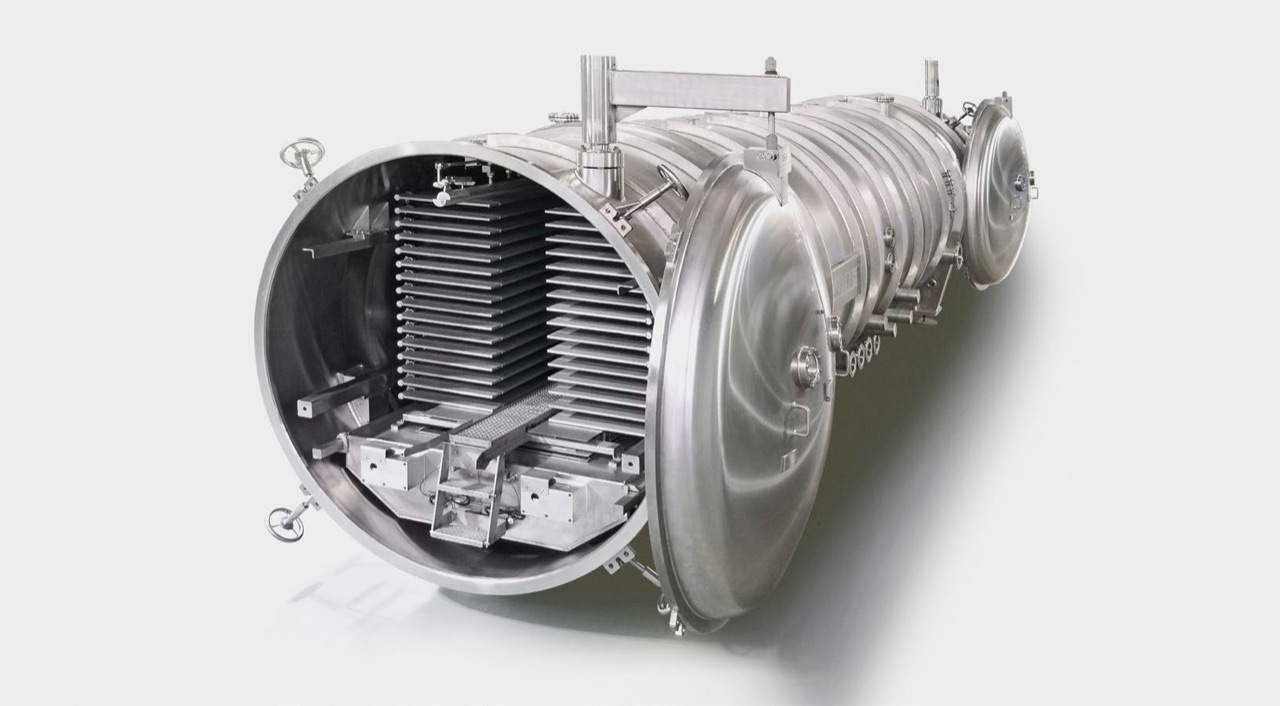
The hard part of comparing food freeze dryer manufacturers is not collecting quotations. It is making every quotation answer the same process, scope and acceptance questions. This buyer-side checklist is written around ArcticDry ADT platforms and their underlying SJ FFD manufacturing references.
Equipment and application views
Start with one written capacity basis
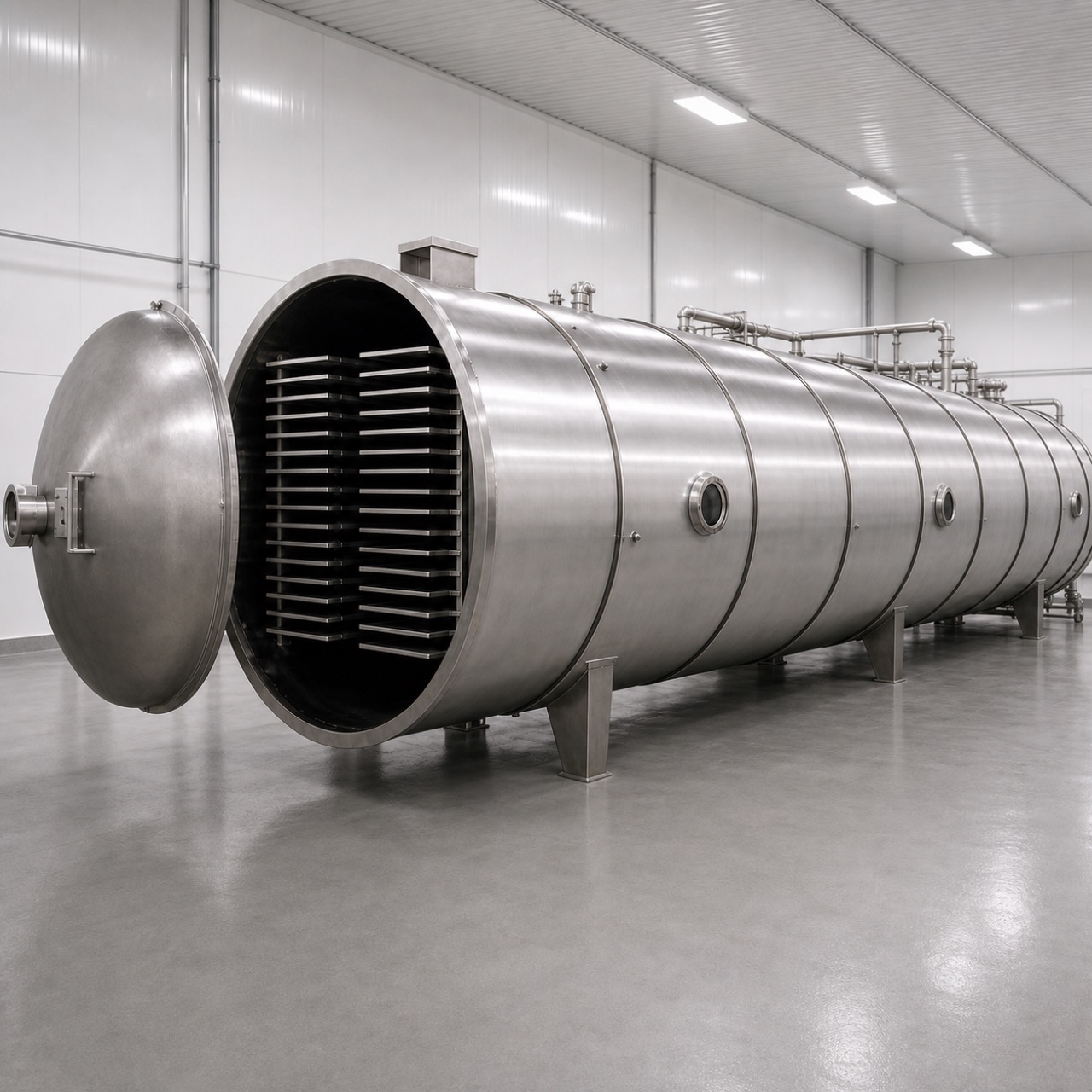
Provide product, incoming moisture, fresh load per batch and day, piece or layer dimensions, kilograms per tray, target endpoint, cycle frequency and pre-freezing method. Ask each manufacturer to state the shelf area, water-removal basis, condenser margin and cycle assumptions used in the offer.
A kilogram headline without those inputs is not a design basis. Two suppliers may use different layer depth, water content or turnaround assumptions and appear comparable when they are not.
Build a scope matrix before comparing price
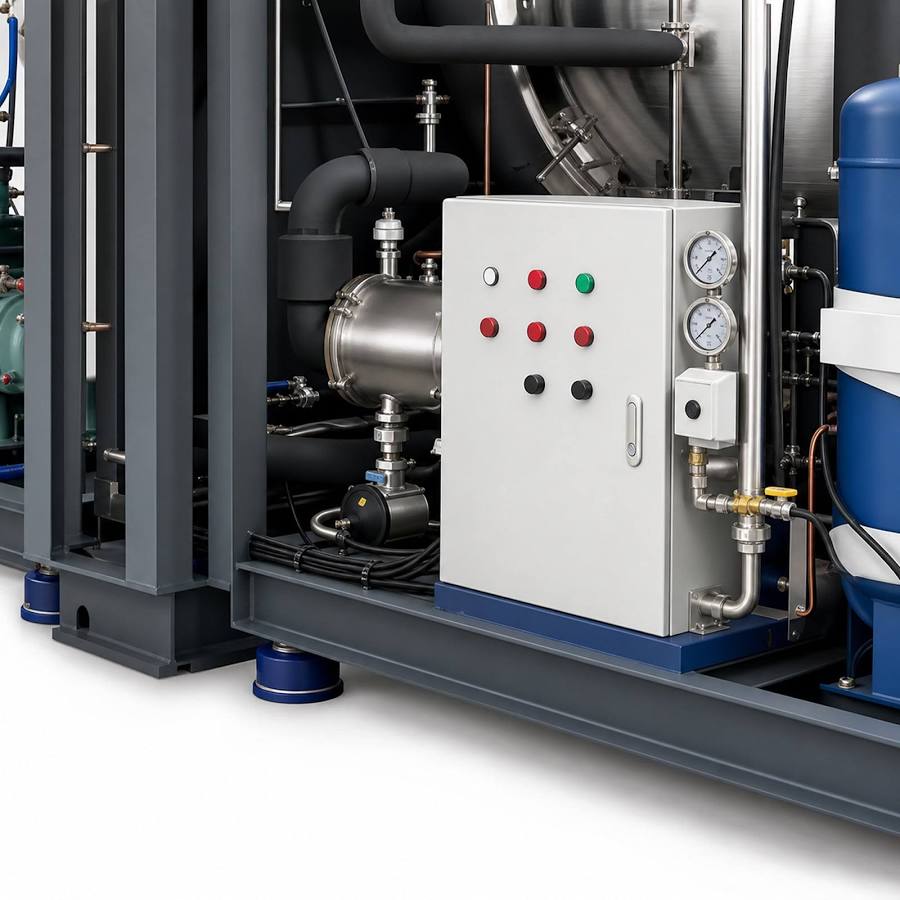
Separate chamber, carts, trays, refrigeration, vacuum, heat-transfer system, controls, defrost, installation supervision, commissioning, training, documentation and spares. Mark included, optional, customer-supplied and excluded items.
Request a marked process or utility diagram. It should show where the supplier boundary ends and where site piping, power, cooling, drainage or ventilation begins.
Freeze the project in a technical agreement
The signed technical agreement should identify the ADT model and underlying FFD manufacturing platform, usable shelf area, cart layout, condenser, pumps, refrigeration, controls, materials, utilities and document package.
Record approved component alternatives and a formal change route. Critical parts, dimensions or connection directions should not change after order without review because they affect service and site installation.
Make FAT testable and traceable
Write acceptance checks before manufacturing is complete. Typical FAT topics include identity and dimensions, workmanship, electrical functions, sensors, alarms, recipes, manual operation, refrigeration pull-down, vacuum and leak behavior, condenser operation, circulation, trends and configured interlocks.
An empty FAT confirms equipment functions. It does not prove throughput for every food. If an agreed frozen load or surrogate is tested, document its loading map, utilities, data and limits in advance.
Close shipment and installation questions early
Confirm shipping split, dimensions, lifting points, center of gravity, foundation loads, door openings and rigging route. Assign responsibility for field piping, cables, insulation, cooling, drain, exhaust and startup consumables.
Define SAT, operator training and commissioning records. Product validation and release remain with the food manufacturer; the equipment supplier supports the approved machine checks and process-development work.
Keep the model identity useful after handover
The commercial brand, manufacturing model and serial number should remain linked in manuals, drawings, backups, spares and service correspondence. SJ Scientific Limited coordinates international sales; Ningbo Sjia Instrument Co., Ltd. provides manufacturing and engineering support for the SJ FFD platform.
Before order, confirm warranty start, remote-support method, recommended spares, software backup and escalation contacts. That service path is part of the evaluated equipment, not a detail to discover after a fault.
Frequently asked questions
What is the most important question for a food freeze dryer manufacturer?
Ask what product, tray loading, water removal and cycle assumptions support the published capacity, then require those assumptions in the technical agreement.
Does FAT guarantee the finished food quality?
No. FAT confirms the agreed equipment checks. Product quality and throughput require the actual formulation, loading, cycle, endpoint method, packaging and user validation.
Why keep both ADT and SJ FFD model identities?
ADT makes the industrial food range easy to navigate; the SJ FFD manufacturing reference keeps drawings, serial records, spare parts and service traceable.
This page provides general engineering and operating context. The model-specific manual, approved site procedure, technical agreement and product validation take priority.