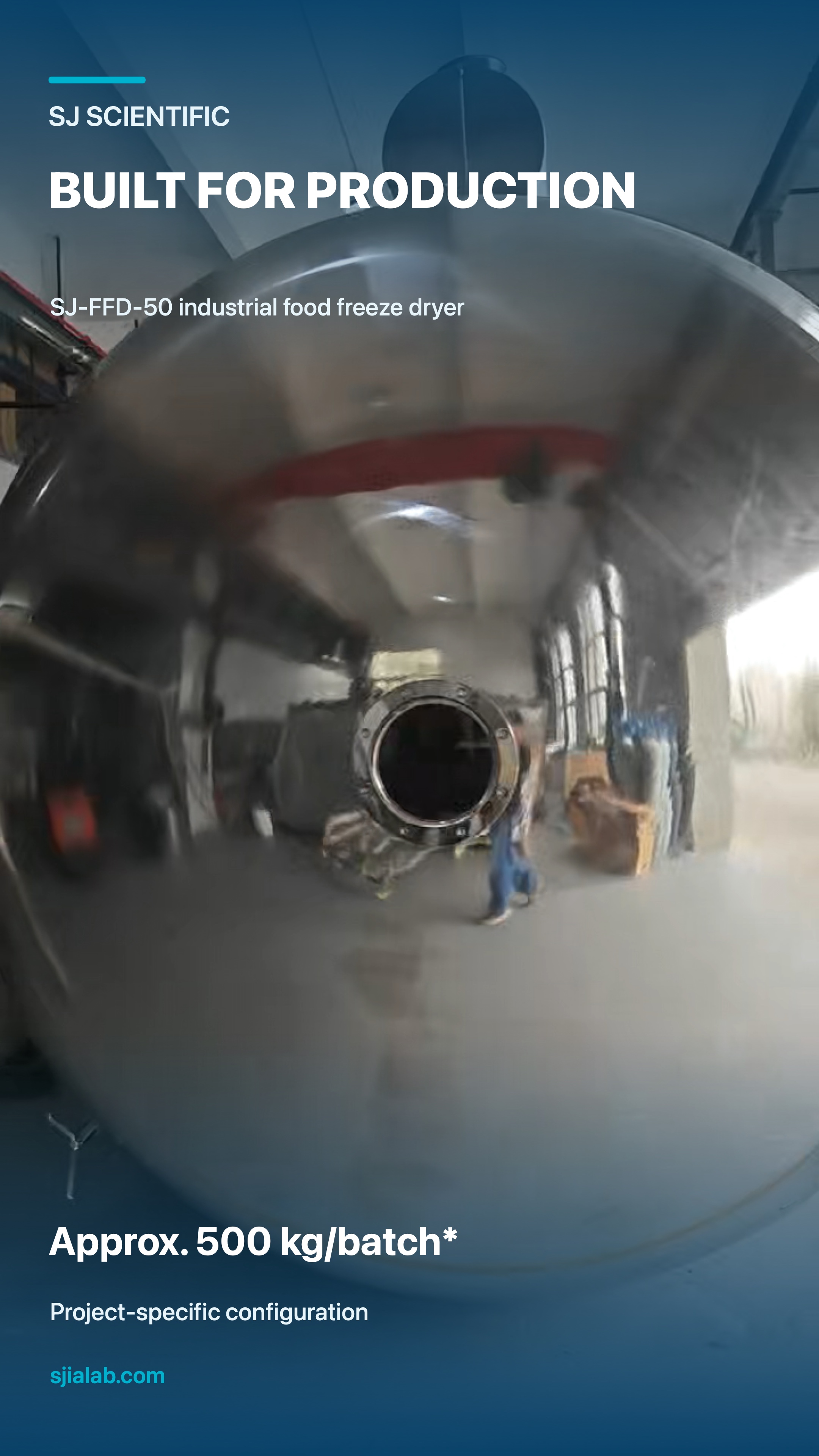
A chamber photograph is useful, but it is not a production guarantee. This English-narrated walkthrough shows the SJ-FFD-50 industrial food freeze dryer and the equipment around it. The model reference is 50 m² usable shelf area with approximately 500 kg/batch of fresh material for planning. Actual load depends on product geometry, layer thickness, initial moisture, tray density, water removal, condenser duty and approved cycle.
Start at the cart route, not just the chamber door
Cart loading connects preparation, pre-freezing, drying and unloading. Check the full loaded-cart envelope, turn radius, floor condition and door approach. A cart that fits the chamber can still create a bottleneck if the pre-freezer, loading aisle or wash area cannot handle it.
Before approving a layout, agree tray handling, vapor-path clearance and the safe method for moving a loaded cart. Include space for the operator and for removing trays after drying. The film illustrates the hardware; a drawing and handling review establish the installation requirements.
Connect the fresh load to water removal
Two products weighing the same can impose different drying duties. A high-moisture fruit batch and a denser prepared ingredient do not necessarily need the same cycle, tray layer or condenser margin. Record initial moisture and the target endpoint, then calculate the water to remove.
The approximately 500 kg reference is not a promise that every food can be loaded to that mass. Match usable shelf area, tray density and layer thickness to a product trial. Do not convert that figure directly into kilograms per hour or finished dry yield.
Read the vacuum and refrigeration view as an interface check
The rear-equipment view makes it easier to discuss service access and the connections required for the proposed system. Ask for the order-specific electrical schedule, heat-rejection requirements, vacuum-pump arrangement, drainage plan and maintenance clearance.
Visible components do not prove a refrigeration rating, ultimate vacuum under product load or energy per kilogram. Those quantities require the agreed configuration and test conditions. Compare energy using the complete cycle and its water removal, including pre-freezing where it is outside the dryer.
Agree acceptance evidence before purchase
Define what the factory acceptance test will demonstrate and what must be checked at the installation site. Separate an equipment functional check from a product-specific drying trial. Agree instruments, recording, loading basis, endpoints and document scope in writing.
This is manufacturer factory footage. It does not identify a customer installation, certify an order, validate food safety or demonstrate a measured production rate. For fruit, coffee, meat, seafood, pet food or specialty ingredients, the intended preparation and endpoint must be reviewed individually.
English narration transcript
Meet the SJ industrial food freeze dryer. The SJ FFD-50 uses a cart-based loading system with fifty square meters of usable shelf area. Its reference fresh-material load is approximately five hundred kilograms per batch, subject to the product, layer thickness, water content, and approved drying cycle. The system integrates the drying chamber, radiant shelves, vacuum equipment, refrigeration, and process controls for factory-scale food production. It can be engineered for fruit, coffee, pet food, meat, seafood, and specialty ingredients. Plan the complete line, including pre-freezing, tray handling, utilities, cleaning, unloading, and moisture-protective packaging. Learn more at S J I A lab dot com.
Frequently asked questions
Does the video prove 500 kg of finished food per batch?
No. Approximately 500 kg/batch is a fresh-material planning reference. The final dry weight and cycle depend on the material and the agreed process.
Can I use this footage to approve a factory layout?
Use it to identify questions. Approve the layout against the current equipment drawing, loaded-cart dimensions, service access and utility schedule for your order.
This page provides general engineering and operating context. The model-specific manual, approved site procedure, technical agreement and product validation take priority.