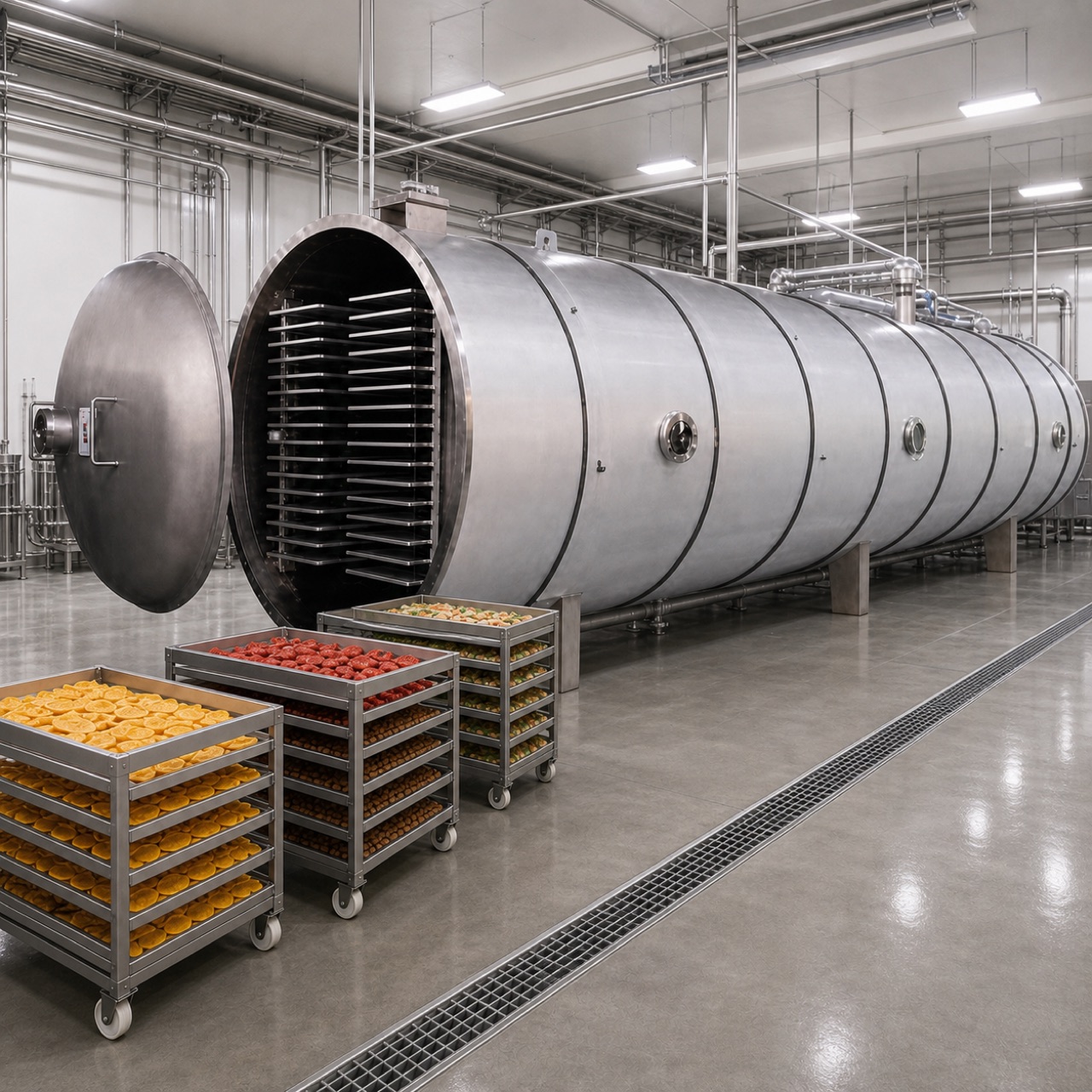
The ADT-2500I / FFD-250 platform is a large factory asset. Its 250 m2 shelf area and approximate 2,500 kg-per-batch fresh-material reference are useful starting points, but they do not define finished output, cycle frequency or plant economics. This guide expands the public product announcement into a production-system review.
Convert fresh input into removable water
Start with prepared fresh mass, measured solids or moisture, expected drain or preparation loss and the intended finished endpoint. The same 2,500 kg fresh input can create very different ice loads for fruit pieces, cooked meals, meat or concentrated ingredients.
Condenser capacity must be checked against total ice and the peak rate at which vapor is released. Shelf area alone cannot confirm vapor-handling margin.
Test the reference load against tray geometry
Record kilograms and depth per tray, product dimensions, frozen condition and cart count. A dense or deep load can fit by weight while creating a mass-transfer problem; a bulky low-density product can fill the shelf before reaching a headline kilogram value.
Use representative trials or justified product data to establish a conservative loading basis before the final cart and shelf schedule is approved.
Model one complete turnaround
Include preparation, separate or in-chamber freezing, transfer, loading, evacuation, primary and secondary drying, venting, unloading, condenser defrost, cleaning and the next setup.
The plant schedule must also account for seasonal ambient conditions, product changeover, maintenance and the availability of trained operators. A nominal batch value is not a daily production promise.
Make packaging and sanitation accept the full discharge
Stage humidity control, barrier packaging, sealing capacity, sampling and labeling for one full batch. Dry product should not wait on open carts because the packaging line was sized around an hourly average.
Map raw and finished zones, dirty and clean cart routes, drains, defrost water and the cleaning method. These interfaces belong in the layout and responsibility matrix.
Freeze the project scope in drawings and tests
Attach the approved general-arrangement drawing, utility schedule, cart and tray list, component scope, control philosophy, FAT plan, shipping modules and installation responsibilities to the technical agreement.
Reference capacity remains conditional on the product and agreed test basis. Do not infer customer results, fixed cycle time or guaranteed saleable output from the platform size.
Frequently asked questions
Does 250 m2 guarantee 2,500 kg of every food per batch?
No. The kilogram figure is an approximate fresh-material planning reference. Product density, water content, tray depth, freezing, cycle endpoint and condenser duty determine the practical load.
Can an FFD-250 be selected from kg per day alone?
No. The review also needs product geometry, removable water, cycle rhythm, pre-freezing, carts, utilities, sanitation, packaging and the plant layout.
This page provides general engineering and operating context. The model-specific manual, approved site procedure, technical agreement and product validation take priority.